09 novembre 2011

Progetto Orto: novembre

E' arrivato l'autunno: nel nostro orto la stagione cambia radicalmente, il sole scompare dietro alla montagna le foglie cascano,  le prime son quelle degli aceri negundo che ci circondano, e la pioggia inizia a ribagnare la nostra terra. E' il momento di dare il cornoletame 500, il preparato biodinamico, a tutta la zona. Approfittiamo del terreno bagnato per sprizzare le gocce di vita, ogni goccia è fonte di nutrimento e rinascita.
Ci ritroviamo in tre a fare moltissimo lavoro:

  • col decespugliatore tagliamo l'erba che ha ripreso a crescere dopo le prime piogge; 
  • tagliamo e portiamo via le piante di zucca, nessuna zucca è riuscita a portare avanti la crescita, probabilmente il poco sole e l'alta umidità ha contribuito anche a spargere un fungo alla pianta; 
  • vengono levate le piante di pomodori e raccolti gli ultimi pomodori verdi, con cui poi farò il delizioso Chutney di Pomodori Verdi.


Nell'orto ormai è rimasto poco: i broccoli le verze e i cavoli devono ancora crescere. Le melanzane hanno sfornato gli ultimi frutti e credo siano arrivate. Solo i peperoncini continuano imperterriti a fruttificare.


Le talee di lauro ceraso

                                        I nostri tardi broccoli iniziano adesso a fiorire


La bieta trapiantata ha ripreso vita e cresce a dismisura.

Le moltissime piante di ramolaccio crescono rigogliose e giganti.


I topinambur che abbiamo trapiantato dai cigli della  strada tengono alta la testa anche se ormai il sole da noi è sempre meno.
Prende pian piano forma, questo nostro giardino. Credo che l'anno prossimo con l'acqua sarà più facile dargli un'impronta più caratteristica . Infatti da quando abbiamo l'acqua i fiori che avevo piantato a primavera (e che erano rimasti dapprima molto scarsi) non hanno smesso di fiorire!


12 ottobre 2011

tra un raccolto e l'altro non lasciamo scapparci nulla all'orto

 Quello delle erbe commestibili è tutto un mondo a parte.
 Eccetto qualche decina di bustoni di misticanza comprata al mercato la mia conoscenze delle erbe spontanee è piuttosto scarsa, rispetto ai grandi conoscitori, intendo dire. So che son molte le piante edibili, ma non le conosco tutte, o con alcune, faccio ancora confusione, date le somiglianze. Del resto non ho mai avuto una nonna che mi portasse con lei nei campi, e il mio interesse nelle piante commestibili era solo relegato all'ambiente cucina. Adesso che abbiamo messo su il nostro orto e che diamo così tanta importanza alla biodiversità lì presente, ci stiamo iniziando anche ad interessare sul cosa è commestibile, oltre a quelle cose, avvolte un pò noiose, che coltiviamo.
Ieri ho raccolto queste piante, erano 7 varietà (nelle foto manca la bieta), 5 tra quelle che coltiviamo  e 2 le spontanee! Ho lavato la verdura e bollita per 10 minuti, tenendo per più tempo le foglie più fibrose che avevano bisogno di una cottura più lunga.
Poi è stata tutta scolata velocemente e ributtata in una padella con olio, aglio e peperoncino, quindi ripassata aggiungendo sale.
L'abbiamo mangiata in una "sleppa"di pizza bianca riscaldata e cosparsa di stracchino......un'esperienza mistica!

raphanus raphanistrum anche detto ramolaccio

carote e rape, ne ho usato solo i ciuffi
malva
zucca
broccoli

10 ottobre 2011

Progetto Orto: ottobre


Siamo ormai a inizio autunno, le foglie degli aceri cascano e il nostro orto ha già acquisito quei colori ambrati e aranciati dell'autunno. Il sole sta girando verso la montagna e ormai viene filtrato solo tenuamente attraverso gli alberi attorno.
I pomodori sono ormai agli sgoccioli della produzione, quelli verdi non ce la fanno a maturare e li stiamo raccogliendo per appenderli e proseguire una maturazione diversa.
Le melanzane stanno lentamente cntinuando a fiorire e crescere, mentre le carote ormai sono pronte, anche se per qualche errore nostro sono rimaste nane.
Ma cavoli, broccoli, bieta e verze continuano la loro lenta crescita e maturazione, e anche i fagioli proseguono a darci bellissimi baccelli fucsia!
La zucca ritardata cresce , dopo vari tentativi non sempre andati bene e lentamente si ingrossa, non so se gliela farà a crescere prima del freddo intenso!! Ma i suoi getti ogni tanto vengono recisi e mangiati!


Una nuova pianta è stata sequestrata ad una zona pubblica ed inserita nel nostro orto, questa gigantesca bieta che Roberto è riuscito a cavare senza danneggiare pur avendo un lunghissimo fittone.
Subito trapiantata e venerata!


la carota premium tra tante nane
 Infine a fine settembre abbiamo inserito la new entry regalatami, un bellissimo melo dai frutti succulenti è stato piantato da 6 mani!

26 settembre 2011

Un addio a Wangari Maathai


Ieri, 25 settembre, è morta Wangari Maathai, premio Nobel per la Pace.
Laureata in biologia, è stata la fondatrice del Green Belt Movement, che dal 1977 ha piantato più di 45 milioni di alberi nella nazione africana.
Mettendo a dimora le piante, facendole crescere e prosperare, le donne keniote hanno sperimentato la forza del legame con l'ambiente, l'appartenenza a un tutto, il potere di cambiare le cose. Più che proteggere semplicemente l’esistente habitat, la sua strategia tende ad assicurare e rafforzare la vera base per lo sviluppo ecologicamente sostenibile. Attraverso istruzione, pianificazione familiare, nutrizione e lotta contro la corruzione, il “Movimento Cintura Verde” ha aperto la strada allo sviluppo a livello rurale.
"Perchè aiutando la Terra a guarire, aiutiamo noi stessi. Se vediamo che il pianeta soffre per la perdita dello strato coltivabile e della biodiversità, per la siccità e la desertificazione, se ci impegniamo per recuperare o salvare ciò che andato perduto, per esempio con la rigenerazione di foreste degradate, il pianeta ci aiuterà a curarci e persino a sopravvivere. Quando possiamo mangiare cibo più sano, non adulterato, quando possiamo respirare aria pura e bere acqua pulita, quando il terreno può produrre vegetali e cereali in abbondanza, le nostre malattie e il nostro stile di vita poco sano vengono leniti"
Possiamo amare noi stessi, solo amando la Terra.

25 settembre 2011

Needing bread

 
When I was a kid I was intolerant to wheat so I never got used to eating much bread at all,
even though I really missed eating everything else (specially pasta and cakes) it was probably because the bread was never good enough to be desired as much!

Its happened to all of of us once in a while to taste bread that you just cant keep your hands off, you keep on munching on small crunchy bits of crust and soft crumb with that yeasty acidic flavour. Seeds, grains and different texture of wheats can make it seem so diffrent from what we are used to eating every day. Mind you, the sandwich bread is not at all popular in Italy and around Rome the best bread you can buy comes from Lariano and its half and half wholegrain and cooked in a woodoven.
But...mine is best!
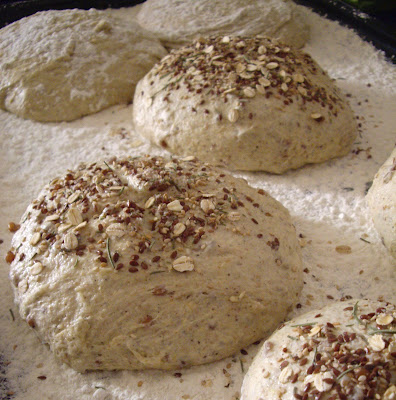
I started making home baked bread last year when my mother came back from Venice with a friend's recipe, she told me he made the most delicious bread so I tried it.
It was true!! It was the most fragrant crusty crust I have ever made!
Working in restaurants I have often made bread , but they all require the kind of precise boring white or slightly decorated bread, not the rustic slabs that I like so much!
This is the recipe, that with a bit of a heart throb I put on this blog, its easy and it makes about 5-6 loaves, that can be cut in halves and frozen for future use.

Pane fatto in casa di Alfredo

Ingredients:
1 kg durum wheat flour (the one used for making pasta)
500 g whole meal flour, spelt or rye flour, I often mix depending on what flours I have left.
80 gr mashed potato ( I've often used the dehidrated one in a bag, but the real things is best)
2/4 Tbsp olive oil
45 gr raw sea salt
12,5 gr fresh yeast
1 good Tbsp malt (sugar can also be used, it usefull for activating the yeast but not necessary)
1,5 l warm water (it is essential that the water is warm NOT hot, say around 18°c otherwise the yeast will die!)

In a big bowl (it must be big enough for everything), pour 1 litre of water in and stir the malt in it. Then add the yeast and stir it with a whip until its all dissolved.
Pour the oil in and the mashed potato.
Now we can start with the flours, first the durum flour, mixing with a wooden spoon, then the rest. If the mixture becomes a little too dry add some water. The total amount of water needed depends on many things, including the temperature and humidity of our kitchen and our oven.
And dont forget the salt, add it as soon as you're adding the flours.
We need to work on the dough as we add the flours and water, probably with our hands until it seems all incorporated.
Now we can we can roll the dough on a floured surface and knead it properly, or just let it rest in the bowl (as long as its smooth and not lumpy), it must be covered with a damp cloth or a plastic bag and left to rise in a warm place. The gluten in the flours will blend properly and it will do the job for us!
The amount of time for the dough to rise depends on us, from a minimum of 2 to 3 hours, to 9 or 10 hours, anyhow the dough needs to double in size. Sometimes I make my dough in the evening and leave it overnight, so that it is ready for cooking the morning after, just in time for breakfast.

Turn the oven on at 160°c, with heat from top and bottom. I often put a pyrex bowl of boiling water in the lower part of the oven to keep the humidity high.
Now we need a cooking tray, quite a big one to fit the bread loves, and flour it with a good millimiter of flour.
With wet hands we need to cut 5-6 pieces of dough and arrange them on the tray, its important to place them well as they musn't be handled too much. If they seem too close its not a problem, when the bread is cooked they can be easily divided.
Now sprinkle the loaves with more flour and bake for about an 1:30 hours
As all ovens are different I suggest you keep an eye on the loaves as they cook, I ususally cook the bread at 140°c because my oven tends to burn the bottom of everything!
When it looks done turn off the oven but leave the bread in for another 10-20 minutes.

Now take it out, divide the loaves and, if possible, wait another half hour before cutting it.
By now the aroma will have filled your house and the salivation will be unbearable!!
Enjoy it with butter and vegemite, cheese or marmalade, and remember that when you start making bread you will never stop!!